
Customs Declaration Service (CDS) Micro learning

Essential Global Framework for Manufactured Component Origin Evaluation

1. Strategic Foundations: The International Trading System and MFN Principles In the contemporary global trade environment, market stability depends on common rules overseen by the World Trade Organization (WTO). Additionally, with 164 members representing 98% of world trade, the WTO provides the multilateral architecture required for predictable commerce. Moreover, for the Senior Trade Compliance Officer, […]

No Comments Read More
Customs Classification Ideas

Is AEO Your VIP Pass to Trusted Trader Programs?

For a high-volume logistics business, customs is not simply a compliance function. The AEO status UK can directly affect delivery times, inventory levels, transport costs, customer satisfaction and ultimately profitability. This is where the AEO status UK can become strategically important. AEO status UK is sometimes described as a “VIP pass” for international trade. The […]

No Comments Read More
Customs Classification Ideas

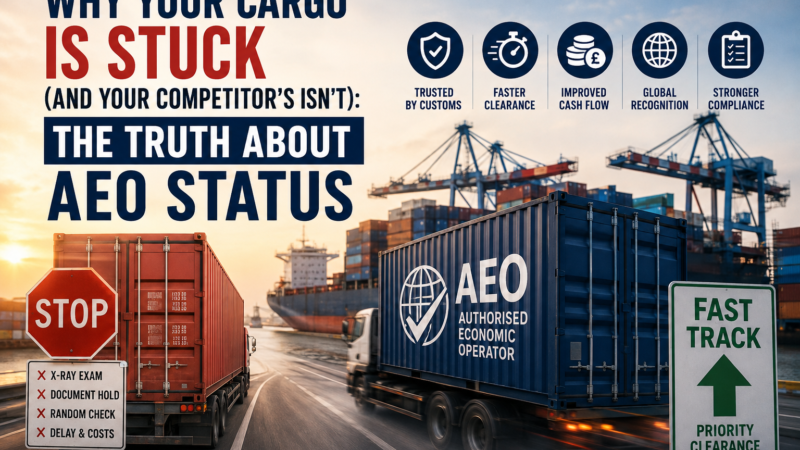
The Ultimate Truth About AEO Status: Why Your Cargo Sticks

When your goods regularly face customs interventions, you may wonder why. Customs agents UK let a competitor move through the border with fewer problems. It may not simply be luck. One factor that can make a significant difference is Authorised Economic Operator (AEO) status. AEO is designed to identify businesses that can demonstrate reliable customs […]

No Comments Read More
Customs Classification

Audit-Ready HTS Classification Strategies: Building a Defensible Classification Process

For many importers and customs brokers, tariff classification is treated as a routine administrative task. A product description is reviewed, a tariff code is selected, and the shipment moves forward. However, customs authorities do not evaluate classifications based on what appears reasonable. They assess whether the classification can be supported by evidence, legal notes, technical […]

No Comments Read More
Ideas

The Hidden Logic of Furniture Classification: 5 Surprising Rules Importers Need to Know

The “Hidden” Logic of Living Spaces: 5 Surprising Truths About How the Customs Classifies Your Furniture 1. The “I Know It When I See It” Fallacy To satisfy the government’s definition of furniture, an object must generally meet four technical pillars: There is, however, a clever technical exception to the “floor-standing” rule: Unit Furniture. Modular items […]

No Comments Read More
News

Urgent Freight Disruptions: Middle East Air & Sea Closures Now Impacting Shipments

Global supply chains are currently facing severe disruption due to escalating geopolitical tensions in the Middle East. Critical trade corridors used by international shipping and air cargo are experiencing closures, rerouting, and operational restrictions, creating significant delays and rising costs for importers and exporters worldwide. For businesses relying on international freight, understanding the impact of […]

No Comments Read More
Ideas

Comprehensive Briefing on International and Technical Rules of Customs Valuation

Executive Summary Customs valuation is a critical component of international trade compliance, serving as one of the three pillars—alongside origin and tariff classification—used to calculate customs duties. Because most duties are levied ad valorem (based on value), the accuracy of these declarations is a primary focus for customs audits. The global standard for valuation is the World […]

No Comments Read More
Ideas

Comprehensive Study Guide: International and Technical Rules of Customs Valuation

This study guide provides a detailed review of the principles, methods, and administrative rules governing the valuation of internationally traded goods, based on the World Trade Organization (WTO) Valuation Agreement and UK legislation. UK Customs Clearance Process: Step-by-Step Guide for Importers & Exporters (2026) Frequently Asked Questions Customs valuation HMRC

No Comments Read More
Ideas

The Economic Passport: 6 Surprising Truths About How the World Actually Trades

Global trade is not a straight line from “factory” to “customer.” It’s a complex web of sourcing, processing, licensing, assembly, and paperwork—often across multiple countries—before a product reaches a shelf in the UK, EU, or US. Think of something as simple as cotton pyjamas. The cotton might be grown in one country, dyed in another, […]

No Comments Read More

Sign In

Register

Reset Password

Please enter your username or email address, you will receive a link to create a new password via email.